
In addition to selecting elected officials, on August 18 Park County voters will have the choice of approving a one mill levy to fund the Cody Conservation District (CCD).
As things currently stand, the CCD is one of just two conservation districts in the state without either a mill levy, or consistent county funding. As a result, the CCD’s budget is almost entirely reliant on applying for and receiving grant funding every year.
“That’s been the problem with this particular district for pushing on to a century now – this uncertainty,” CCD board treasurer Richard Jones said. “It’s been on the verge of collapse many times.”
In addition to at times posing an existential risk to the CCD, the uncertainty surrounding funding creates difficulties in hiring and retaining employees.
“Right now (CCD employees) are all paid through grants, and those are usually one year grants. Think about a job where you don’t know that you’re going to have a job at the end of the fiscal year,” CCD board chairman John Tanaka said.
Soil and water
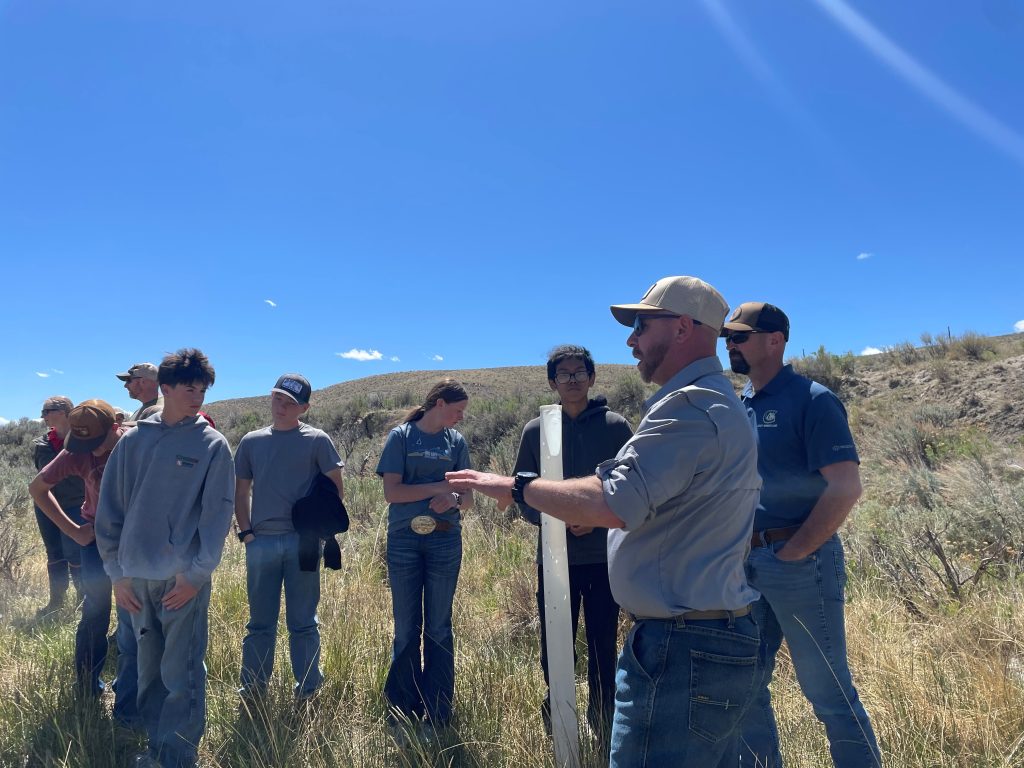
The CCD’s scope of work is broad, and its services offered range from soil testing, E. coli monitoring in area waterways, and outreach and education programs in local K-12 schools.
“We do things both in town and in rural areas, dealing with conservation of land, water, and pretty much any natural resource to help people do things better on their property to leave things better for future generations,” Tanaka said.
Additionally, the CCD serves as a local voice for projects in the area to receive funding from the National Resources Conservation Service. Jones said that last year, the CCD helped direct between $3 million to $6 million in subsidies for projects in Park County including pivot systems, irrigation systems, and soil conservation projects.
“That’s just pure cash money coming into the county,” Jones said. “A mill levy is $60 a year on the average property in Park County, so for a $60 investment by an individual, they’re getting millions of dollars flowing into this county.”
Consistent local funding
The CCD’s current funding model requires its staff of two to dedicate a significant amount of time to both grant writing and ensuring the CCD is in compliance with grant requirements, CCD District Manager Cory Williams said. Funding from a mill levy would reduce the burden of grant writing and grant compliance, allowing the CCD staff to accomplish more work related to soil and water quality management.
If voters determine a one mill levy is worthwhile, “I would say close to 20 hours per week could be saved for sure,” Williams said.
Additionally, moving to a mill levy funding model would afford the CCD an improved ability to focus its efforts on projects aligned with community interests. Due to the nature of their current funding model, CCD personnel spend a nonzero amount of time fulfilling obligations to grant authorizing agencies, which don’t always align 100% with community interests, in order to receive the funding that allows the CCD to conduct work in the community, Williams explained.
“If we were mill levy funded, we could address the concerns and work in areas that are 100% community driven, without an outside agenda,” Williams said. “With those grants, (the grant distributors) have always got an agenda – they’ve always got something they want, before we can do the good work that we’re doing.”